
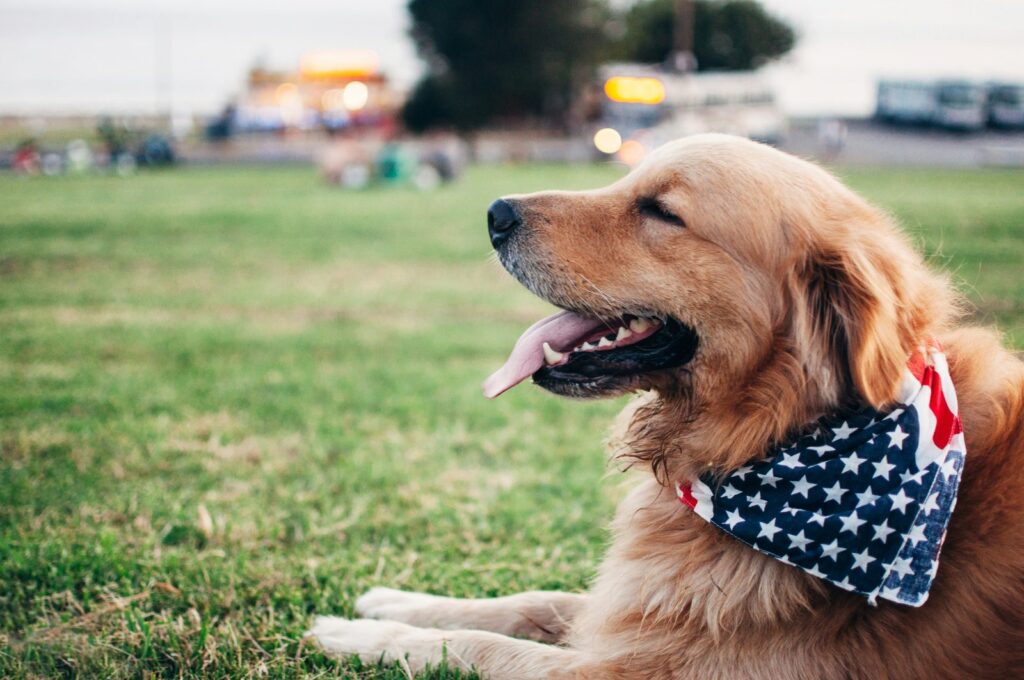
Fourth of July Dog Photos (Without the Stress)
The trick to a great patriotic photo of your dog is not better gear or a calmer dog. It is better timing - and skipping the fireworks entirely.
To photograph your dog on the Fourth of July without stress, shoot in the calm window before dark - early morning light or the hour before sunset - in a shaded yard or indoors, well away from any fireworks. Use one gentle sound cue to earn a single clean glance instead of chasing 47 blurry tries, keep styling simple with a bandana rather than a full costume, and end the session before the noise of the evening begins.
The fireworks are for people. The photo is of a relaxed dog in good light, taken hours earlier.
Every July, at the rescue events and demo tables I work, I watch the same thing happen. Someone pulls out their phone to get one cute holiday picture of their dog, the dog is already wound up from the heat and the crowd, and twenty seconds later they have nine photos of an ear and a tongue and one very tired human. By the time the actual fireworks start, nobody is taking pictures - they are looking for a place to hide a panting dog.
So here is the thing I tell people, and it surprises them every time: the best Fourth of July dog photo has no fireworks in it at all. It is taken in the morning, or in that soft hour before sunset, when your dog is still calm and the light is doing all the work for you. Get that shot, and the evening can be exactly what it should be for your dog - quiet, indoors, and over with.
8 ways to get a calm, happy Fourth of July dog photo
Shoot in the calm window, never during the show
Pick a time hours away from any fireworks - early morning, or the golden hour before sunset. Your dog is relaxed, the light is warm and flattering, and you are not competing with booms in the distance. This single choice does more for the photo than any setting on your phone.
Control the spot, not the dog
A shaded patch of yard, a porch, or a bright spot indoors by a window gives you even light and a calm background. Trying to wrangle a dog in the middle of a backyard party is how you end up with the 47-Photo Problem. Quiet corner, soft light, one or two people - that is the whole setup.
Keep the styling light
A red, white, and blue bandana reads as festive in a photo and barely registers to the dog. A full costume, a hat, and a flag draped over the shoulders usually reads as "please get this off me." If your dog freezes or paws at it, the outfit is the problem, not the dog. Less on the dog, more dog in the photo.
Lead with one gentle sound, not a pile of noise
Dogs have an orienting reflex: a single novel sound makes them turn toward it and hold still for a beat. That beat is your photo. The mistake is making ten sounds at once - whistling, saying the name, snapping fingers - which just teaches your dog to tune you out. One clean cue, perfectly timed, beats a wall of noise every time. This is exactly the calm window where a soft, friendly squeak works, long before the night gets loud.
Get down to their level
Shooting down at a dog flattens them and emphasizes the floor. Kneel or lie down so the camera meets their eyes. Suddenly you have a portrait with depth, catchlights in the eyes, and a background that falls away. Same dog, same phone, completely different photo.
Skip the fireworks backdrop
It is tempting to want the dog and the sky in one frame. In practice a phone cannot expose a dark dog and a bright burst at the same time, so you get a silhouette and a smudge - and you have parked an anxious animal under the loudest thing in the neighborhood. If you want fireworks in your camera roll, shoot those separately, dog safely inside.
Read your dog and stop when they are done
Lip licking, yawning, a turned head, hard panting in the shade - those are your dog telling you the session is over. Honor it. A handful of relaxed frames is worth more than a hundred taken from a dog who wanted to leave, and pushing past those signals only teaches your dog that the camera means pressure.
Build the safety net before anything else
This is the real "without the stress." More dogs go missing around the Fourth than any other time of year. Confirm the ID tag is readable and the microchip details are current, make sure the yard is genuinely secure, and have a quiet indoor room ready for the evening. Do that first, take your photo in the calm of the day, and you can enjoy the night knowing your dog is safe.
Two ways to shoot the Fourth - and why one wins
| Approach | What you actually get | Stress on the dog | Best for |
|---|---|---|---|
| Calm daytime window (morning or golden hour) | Warm, even light. Sharp eyes. A relaxed expression you will actually print. | Low. Sound and styling are gentle and brief. | The keeper photo, every time. |
| During the fireworks (after dark) | Silhouettes, motion blur, or a dog that is no longer in frame. | High to severe. The worst possible moment to ask for a pose. | Photographing the fireworks alone - dog safely inside. |
Where Squeak N Snap fits
That fourth tip - one gentle sound, perfectly timed - is the whole reason Squeak N Snap exists. It is a handheld plush squeaker that pairs with your phone over Bluetooth. You hold it, give it one squeeze, and the squeak and the camera shutter fire at the exact same instant. Your dog hears a soft, novel sound, turns toward it, and the photo is already taken - on the glance, not three seconds after it.
On the Fourth of July specifically, the timing matters as much as the tool. Used in the calm daytime window, that one friendly squeak is a curious, happy sound - the opposite of the night's bangs. It is a camera accessory, not a noisemaker, and it works because it gives you one clean cue instead of the pile of noise that makes dogs tune out. It Works, It's Real, It Lasts.
The Joy Capture Kit
One squeeze, one squeak, one perfectly timed photo. Built so the moment you want is the moment you get - calm dog, real glance, no 47 tries.
See the Joy Capture KitCalm holiday photos, in your inbox
Join our list for simple, vet-friendly tips on photographing your dog through fireworks season and every season - plus the occasional good dog story.
Fourth of July dog photo questions
When is the best time to take Fourth of July dog photos?
Take them in the calm part of the day - early morning or the hour before sunset - hours before any fireworks begin. The light is flattering and your dog is relaxed, which is when the good photo actually happens.
Should I take photos of my dog during the fireworks?
No. For most dogs the fireworks are the most frightening event of the year, and a phone cannot expose a dark dog against bright bursts anyway. Take your photo earlier in the day and keep your dog quietly indoors during the show.
How do I get my dog to look at the camera for a holiday photo?
Use a single, gentle, novel sound and shoot the instant your dog turns toward it. One clean cue triggers their orienting reflex and earns a brief, sharp glance. A handheld squeaker like Squeak N Snap pairs that squeak with the shutter so the photo lands on the glance.
What should my dog wear for a Fourth of July photo?
Keep it light. A red, white, and blue bandana looks festive and barely registers to the dog. Skip full costumes and hats, which most dogs find uncomfortable and which read as stress in the final photo.
How do I keep my dog calm and safe on the Fourth of July?
Confirm ID tags are readable and microchip details are current, secure your yard, and set up a quiet indoor room away from the windows for the evening. More dogs go missing around the Fourth than any other time of year, so the safety plan comes first.
Hero photo: Martin Castro / Unsplash